Reflections on the 2025 World Expo from Osaka for the ENCATC Magazine
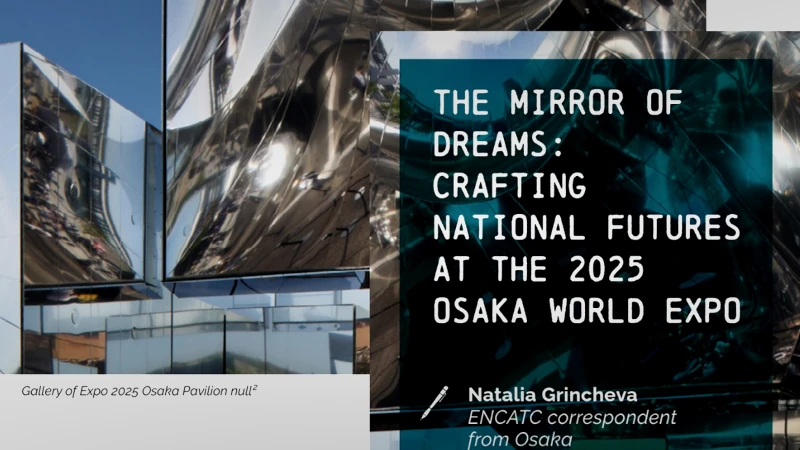
The Mirror of Dreams: National Identity and Soft Power at Expo 2025
The Mirror of Dreams decodes the 2025 Osaka World Expo as a strategic arena for negotiating competitive national identity and global soft power. Moving beyond simple showcases of technological innovation, the article analyzes national pavilions as physical manifestations of ideological arguments, where state actors reconcile past heritage, present realities, and future aspirations to script their place in global governance.
The analysis examines three key dialectical frameworks across six prominent national pavilions. First, the dialectic of cultural capital contrasts France’s leveraging of established luxury craftsmanship and corporate-backed heritage against Singapore’s forward-looking, participatory co-creation of a shared future identity. Second, the dialectic of global power compares China’s projection of authority rooted in 5,000 years of civilizational restoration against the United States’ narrative of space-frontier disruption and perpetual reinvention. Finally, the dialectic of sustainability juxtaposes the UAE’s post-oil techno-solutionism against Indonesia’s performative human-centric harmony, which exposed stark disconnects with its concurrent domestic unrest. The article conceptualizes the World Expo not as a simple mirror reflecting national brands, but as a "dreaming glass"—a refractive lens that uncovers how nations strategically refract history and mask domestic anxieties to claim leadership in tomorrow's world.


